Do you want to know more about the Empowering Methodologies and our online course?
Then watch Professor Emma Bell's Webinar where she talks about: What are Empowering Methodologies and why should you consider using them?
Webinar on WorkCast: https://view6.workcast.net/AuditoriumAuthenticator.aspx?cpak=2050259622411245&pak=3373958591923085
Showing posts with label Management Research. Show all posts
Showing posts with label Management Research. Show all posts
Monday, February 10, 2020

Thursday, January 30, 2020
Empowering Webinar 1
Do you want to know more about the Empowering Course?
Then watch Dr Tim Butcher's Webinar where he talks about the content of the Empowering Methodologies in Organisational Research Online Course.
Webinar on WorkCast: https://view6.workcast.net/ControlUsher.aspx?cpak=5841196523277204&pak=8983946795088759
Webinar on YouTube: https://www.youtube.com/watch?v=R0rosQywaX0&feature=youtu.be
Then watch Dr Tim Butcher's Webinar where he talks about the content of the Empowering Methodologies in Organisational Research Online Course.
Webinar on WorkCast: https://view6.workcast.net/ControlUsher.aspx?cpak=5841196523277204&pak=8983946795088759
Webinar on YouTube: https://www.youtube.com/watch?v=R0rosQywaX0&feature=youtu.be
Friday, January 17, 2020
Empowering Online Course Goes Live!
Excellent News!
The Empowering Online Course is live! 😃
The name of the course is Empowering Methodologies in Organisational Research
The course is aimed at doctoral, specialist Masters and undergraduate students in management, business and other social science disciplines globally, as well as at practitioners in business, non-profit or public sector organisations interested in learning how to do research in ways that are experienced as more empowering. The course logo features an image of an ear to emphasise listening with the whole body and ‘being with’ participants as a way for researchers to be fully present and attentive to what they encounter.
The course includes video-recorded short talks, delivered by members of the project team, Professor Emma Bell, Dr Tim Butcher in addition to leading experts from University of London, Loughborough, Sheffield and Stockholm University, on how to use creative, qualitative methods and develop more empowering ways of doing research.
In addition to online text and recommended readings, the course also features six case studies developed by research students at the University of Delhi who use research diaries, photographs and video to reflect on the process of engaging with research participants and collecting data. Course participants are encouraged to keep a learning diary and receive a certificate on completion of the course.
Access the Online Course via this link: https://www.open.edu/openlearncreate/empowering-methodologies
You don't need an account to browse through the content. However you will need to register if you would like to officially take the course, as this will allow you to record your activities and learning diary as well get a statement of participation.
The Empowering Online Course is live! 😃
The name of the course is Empowering Methodologies in Organisational Research
The course is aimed at doctoral, specialist Masters and undergraduate students in management, business and other social science disciplines globally, as well as at practitioners in business, non-profit or public sector organisations interested in learning how to do research in ways that are experienced as more empowering. The course logo features an image of an ear to emphasise listening with the whole body and ‘being with’ participants as a way for researchers to be fully present and attentive to what they encounter.
The course includes video-recorded short talks, delivered by members of the project team, Professor Emma Bell, Dr Tim Butcher in addition to leading experts from University of London, Loughborough, Sheffield and Stockholm University, on how to use creative, qualitative methods and develop more empowering ways of doing research.
In addition to online text and recommended readings, the course also features six case studies developed by research students at the University of Delhi who use research diaries, photographs and video to reflect on the process of engaging with research participants and collecting data. Course participants are encouraged to keep a learning diary and receive a certificate on completion of the course.
Access the Online Course via this link: https://www.open.edu/openlearncreate/empowering-methodologies
You don't need an account to browse through the content. However you will need to register if you would like to officially take the course, as this will allow you to record your activities and learning diary as well get a statement of participation.
Monday, October 7, 2019
Empowering Online Course - First Draft
Good news!!
We have submitted the first draft of the Empowering Online Course to the OpenLearn Create team at the Open University. They will upload the content and we will probably be able to review it in a months time. It will be interesting to see how everything looks on the VLE.
We have submitted the first draft of the Empowering Online Course to the OpenLearn Create team at the Open University. They will upload the content and we will probably be able to review it in a months time. It will be interesting to see how everything looks on the VLE.
Thursday, August 15, 2019
Empowering Online Course
As part of the project we are designing an online course which will be hosted at the Open University on a platform called OpenLearn Create. Emma and Tim have designed the structure of the course are now writing the content. It will contain 9 sections, including theory on Qualitative Research and Empowering Methodologies. We will offer written material as well as video lectures Emma and Tim filmed last year and video clips from the Project's Conference. Our speakers were kind enough to allow us to film their presentations.
We are also including vignettes with practical examples on how to carry out Empowering research. Actually at the moment I am going through the material our Indian students collected during their fieldwork at the beginning of this year. They brought their data back in May for the Project's conference. I am selecting the best audio-visual material as well as research diary excerpts to showcase and explain how to carry out Empowering Methodologies.
More soon.
We are also including vignettes with practical examples on how to carry out Empowering research. Actually at the moment I am going through the material our Indian students collected during their fieldwork at the beginning of this year. They brought their data back in May for the Project's conference. I am selecting the best audio-visual material as well as research diary excerpts to showcase and explain how to carry out Empowering Methodologies.
More soon.
Tuesday, June 18, 2019
Empowering Methodologies in Management Research Workshop
 |
| Rohit Shah organising themes on post-its. |
 |
| Jaideep and Nikhil Kumar discussing themes |
 |
| Avilasa Sengupta presenting her data |
During the workshop I had the chance to copy the Students' Data Files into a secure space within the University's SharePoint platform. The data sets are comprised of audio-visual material of interviews and participant observation, and transcriptions. Next step is to do an inventory of the data and setup to work on the above project outputs.
And finally we also had time to relax. Breaks were not only refreshing but a good time to talk and know each other more. On day One during the lunch break, Tim brought his nice, vintage(?) camera and took pictures of us.


Tuesday, June 11, 2019
Empowering Methodologies in Management Research Conference
We are half way through the project and as planned we hosted a Conference on Empowering Methodologies, 29-30 of May at the Michael Young Building, Open University. I attended both days and enjoyed the experience. We received a healthy number of attendees and a diverse set of scholars who presented a variety of perspectives on qualitative research. Those perspectives proposed innovative ways to develop qualitative research methodologies involving more democratic and empowering views. We also had the opportunity to meet with our Indian colleagues who visited the UK for two weeks. They attended the Conference and a two-day Workshop hosted on the 3-4 of June.
Starting the Conference on Day 1, Emma, gave an introductory presentation titled "What are Empowering Methodologies?". Professor Emily Keightley (Loughborough University) continued with ‘Creative Methods in Studying Memory and Change’, followed by Dr Emanuela Girei (University of Sheffield) presenting ‘Decolonising Management Knowledge and Research Practice’ and Professor Torkild Thanem (Stockholm University) presenting ‘Embodied Research Methods in the Social Sciences’. A panel discussion on ‘Opportunities and Challenges in Empowering Methodologies in Management Research’ closed the first day; this was chaired by Steve Brown with Professor Sunita Singh Sengupta, Professor Gillian Symon (Royal Holloway, University of London) and Dr Sophie Mills (University of Nottingham).
After the Panel Discussion everyone gathered for drinks and a nice dinner at an on-campus restaurant. I could see everyone enjoying themselves following up conversations that began at the conference. Personally I had a great time talking to our Indian Colleagues (Professor Sunita, Avilasa, Guang, Nikhil, Rohit, Sumeet and Jaideep) about their impressions of the Conference, the University Campus and the UK in general.
Continuing with the Conference, Dr Nirmal Puwar (Goldsmiths, University of London) started day two with ‘Live Methods and the Sociological Imagination’ followed by Dr Lauren McCarthy (Royal Holloway, University of London) on ‘Visual Participatory Research: From Development to Management Studies’.
The final session was a World Café on "Doing Empowering Research" lead by Dr Tim Butcher and which involved our six students from University of Delhi presenting their Case Studies and their experiences at carrying out Empowering Methodologies. The students got useful feedback and more ideas to continue their work for the project. For me, this was the highlight of the whole event. The attendees were so interested, energetic and enthusiastic about meeting our Indian colleagues, so much that they asked the organisers to continue with the World Cafe a few minutes more after we had ran out of time!
Starting the Conference on Day 1, Emma, gave an introductory presentation titled "What are Empowering Methodologies?". Professor Emily Keightley (Loughborough University) continued with ‘Creative Methods in Studying Memory and Change’, followed by Dr Emanuela Girei (University of Sheffield) presenting ‘Decolonising Management Knowledge and Research Practice’ and Professor Torkild Thanem (Stockholm University) presenting ‘Embodied Research Methods in the Social Sciences’. A panel discussion on ‘Opportunities and Challenges in Empowering Methodologies in Management Research’ closed the first day; this was chaired by Steve Brown with Professor Sunita Singh Sengupta, Professor Gillian Symon (Royal Holloway, University of London) and Dr Sophie Mills (University of Nottingham).
 |
| Professor Torkild Thanem from Stockholm University |
 |
| Panel Discussion: Professor Sunita Singh Sengupta, Dr Sophie Mills, Professor Gillian Symon and Professor Steve Brown |
After the Panel Discussion everyone gathered for drinks and a nice dinner at an on-campus restaurant. I could see everyone enjoying themselves following up conversations that began at the conference. Personally I had a great time talking to our Indian Colleagues (Professor Sunita, Avilasa, Guang, Nikhil, Rohit, Sumeet and Jaideep) about their impressions of the Conference, the University Campus and the UK in general.
 |
| Indian Delegates |
Continuing with the Conference, Dr Nirmal Puwar (Goldsmiths, University of London) started day two with ‘Live Methods and the Sociological Imagination’ followed by Dr Lauren McCarthy (Royal Holloway, University of London) on ‘Visual Participatory Research: From Development to Management Studies’.
 |
| Dr Lauren McCarthy, Royal Holloway, University of London |
 |
| Dr Nirmal Puwar, Goldsmiths, University of London |
The final session was a World Café on "Doing Empowering Research" lead by Dr Tim Butcher and which involved our six students from University of Delhi presenting their Case Studies and their experiences at carrying out Empowering Methodologies. The students got useful feedback and more ideas to continue their work for the project. For me, this was the highlight of the whole event. The attendees were so interested, energetic and enthusiastic about meeting our Indian colleagues, so much that they asked the organisers to continue with the World Cafe a few minutes more after we had ran out of time!
 |
| Rohit Shah |
 |
| Sumeet Anand |
 |
| Guangpuanang Kahmei |
 |
| Avilasa Sengupta |
 |
| Nikhil Kumar |
 |
| Jaideep |
Monday, April 1, 2019
Qualitative Research by Avilasa Sengupta

“Every man is a story. Some are told, some are heard. And some get lost in it forever.”
The mind is always operating around stories. What is our history? Isn’t it just a story we have? I have a story, you have a story. So when we claim something to be evidence, it is also to be storied by my mind to be understood, which shows that our search to be objective, is also one of the invaded formations in our story telling approach.
My understanding of qualitative methods emerged based on the assumption that human interaction is nothing but stories. The study of intentionality, and the inferences of it can be understood only in terms of human interactions. The inferences that why someone is quiet or why someone spoke, is because we have the ability to see both the visible and the invisible.
We as humans are not satisfied by the visible, rather intrigued and enamoured by the invisible. This oscillation or composition between the visible and the invisible is what differentiates us from each other. Each one of us has different proportions, different assertions, and thrusts of visibility and invisibility. When we have an understanding of this composition, anything cannot be linear, because linearity is only one understanding. For example, we buy a flower from a store. The person, who sold the flower, will have a meaning a reason for selling the flower. He/she brought the flower, kept it at the store, and sold it. The one, who bought it, would have a reason a meaning of buying it. The person the flower was gifted to, would have a meaning and understanding of it. Here, the persistence of both the person having the flower in her room and the person who gifted it can be explored. In looking at the flower every now and then, the person thinks about the latter. The seller might not have thought that the flower would last for x-number of days, the giver did not expect the receiver to react a certain way, the receiver would not have expected to receive it.
What I attempt to explain here is that there is a possibility to see things at a variety of levels, including a literal level, a symbolic level, and a metaphorical level. The sensibility of a method is not necessarily a learning that we have on encountering the participant; rather our ways of looking at the world and understanding it builds our sensibilities. We are too focused on deriving conclusions and giving summaries to things around us. And it is this very desire which makes us feel incomplete, impoverished with our own sense of communication. There is a constant anxiety to conclude ‘appropriately’ and to put our understanding ‘rightly’ to the audience. For e.g. when we use ‘basically’ in our conversations, we use it to denote that this xyz is the crux of the point in question. This limits the expansion of the meaning and understanding around that point. We often fail to see how the point is related or unrelated to the most private part of us. What it evokes in me, what is my positionality while understanding it a certain way, what am I missing out in order to fit it into a framework? Every act, symbol or language, communicates us the composition of the visible and the invisible.

Understanding is invariably embedded in a way that the mind receives a story and qualitative methods emphasise on the temporal beauty of these stories. Qualitative methods focus on this positioning where the boundaries which we take between the past, present and future is not very linear and we give the speaker and the listener a space to oscillate back and forth and make a sense to both the lived and unlived, the told and the untold story. It gives us the space to witness and ease with our differences and have a healing capacity. The ability to revisit the past time and again and resolve our knots and to discover within ourselves the unknown parts of us is only one of the healing ability that qualitative methods have to offer. It helps us understand and listen to the other because we are able to listen to our selves. The claim we make as a researcher that ‘I have listened’, is a false assumption because listening is not that easy and qualitative method helps us look into this difficulty.
----------
Avilasa Sengupta is a post-graduate student at the Department of Psychology, University of Delhi. She is working on ‘Ecofeminist organisation and earth democracy in food production’.
Tuesday, March 12, 2019
My Journey as a Qualitative Researcher by Nikhil Kumar
I was very young when I was handed over a story book to read by myself. That was a s sincere effort of my father to start reading and speaking in English right from the beginning. The story book was “The little match girl”. A story that made me think at a young age of 7 that how a structured combination of words curated with deep insights can bring an individual face to face with one’s own vulnerabilities. My vulnerability after reading that story was if I ever lose parents and the support of my family how will I be able to sustain my existence.
My journey to deep dive into tales and narratives to understand the unheard and unexpressed, that started there with an illustrated classic took a relapse after 15 years when I enrolled myself for post-graduate in Psychology in Delhi University and opted for Qualitative Research Methods as one of the papers.
The different readings and articles that I went through to understand the difficult concepts that I always overlooked like silence, speech, conversation, narratives, etc., made me realize how we as individuals often are surrounded by so many tales and stories that are often wounded and silenced by prejudices, social stigmas, dogmas and conventions that are perceived to be right by the majority.
As a qualitative researcher, I have not only become cognizant of a new perspective to observe these issues but I have become more sensitive towards them. The readings that always seemed to be liability were proved to be an asset as that process churned and catalysed the process of self-inquiry in order to understand and empower the other. Through qualitative research I learnt how to use the personal experiences as a tool to effectively understand the struggles of the one being researched, I realized the journey from an outsider to insider can only be covered well if I do not supress my primary experiences with my own reality that we often would and neither allow myself to be overwhelmed by it. I understood how to use my experiences be it in silence via observing my ‘other’ or in a dialogue with the ‘other’ i.e., the process of critical subjectivity.
Qualitative research empowered me by awaking the curious student in me who does not claim to know everything. Since only if I know that ‘I don’t know’ I will be able to really empathise with the ‘other’ and in order to connect with the other I will have to give upon the claim that I know everything.
Maintaining a reflexive journal throughout the study is a very healthy habit for a researcher as it works as a doctor’s guide during the analysis of the data. Since we hear, read and watch the data after a significant time period to analyse it. Referring back to the reflexive journal to understand my own challenges while I was in interaction with my subject helps me to understand and analyse without any bias at a holistic level barring the research finding from any pre-conceived notion that I am influenced with.
Each story that I heard, shaped and reshaped my research process as every story helps another research question to emerge. Analysis of every verbatim, every transcript is a constant negotiation with the ‘my perception of reality’ vis-à-vis ‘how the other’s reality is shaped’ and unveils multiple layers of reflexivity during the process.
“I can take any empty space and call it a bare stage. A man walks across this empty space whilst someone else is watching him, and this is all that is needed for an act of theatre to be engaged.”
My journey to deep dive into tales and narratives to understand the unheard and unexpressed, that started there with an illustrated classic took a relapse after 15 years when I enrolled myself for post-graduate in Psychology in Delhi University and opted for Qualitative Research Methods as one of the papers.
The different readings and articles that I went through to understand the difficult concepts that I always overlooked like silence, speech, conversation, narratives, etc., made me realize how we as individuals often are surrounded by so many tales and stories that are often wounded and silenced by prejudices, social stigmas, dogmas and conventions that are perceived to be right by the majority.
 |
| Street Play Theatre - New Delhi |
Qualitative research empowered me by awaking the curious student in me who does not claim to know everything. Since only if I know that ‘I don’t know’ I will be able to really empathise with the ‘other’ and in order to connect with the other I will have to give upon the claim that I know everything.
 |
| Street Play Performers - New Delhi |
Each story that I heard, shaped and reshaped my research process as every story helps another research question to emerge. Analysis of every verbatim, every transcript is a constant negotiation with the ‘my perception of reality’ vis-à-vis ‘how the other’s reality is shaped’ and unveils multiple layers of reflexivity during the process.
“I can take any empty space and call it a bare stage. A man walks across this empty space whilst someone else is watching him, and this is all that is needed for an act of theatre to be engaged.”
Peter Brook, The empty space
---------
Nikhil Kumar is a post-graduate student at the Department of Psychology, University of Delhi. He is looking at street plays which address issues of gender in Indian society, organisations and workplaces. His Case Study is titled: Giving voice to unspoken issues of gender through the organization of Street Play Theatre.
Sunday, March 10, 2019
Fieldwork Update and Thoughts by Guang Kahmei
It has been almost 5 months that I'm working with the UKIERI project team to develop a Case Study on “Organizational Tradition, Loss and Change of Naga Tribes in the North East State of India”. It has been an incredible experience to study the life of Naga (as I myself one) which I had never given much thought before. Naga is an ethnic group of people inhabited in the modern Indian states of Assam, Manipur Nagaland, Arunachal Pradesh and Chin hill of Modern Myanmar. They are the indigenous tribes which consist of more than 55 tribes approximately adding upto 89 languages and dialect.
 |
| Village road |
As part of my fieldwork, I travelled to Zeliangrong hill (western part of Naga hill) in Manipur and Nagaland for my data collection from 20th December 2018 to 13th January 2019. I travelled to the heart of Zeliangrong region (Noney, Tamenglong) and the capital city of Manipur (Imphal) and Nagaland (Kohima) for interviews, storytelling session, Group discussion, Observing their festival and ritual performance. I also visited different Zeliangrong villages to observe their economy and to gather a holistic knowledge and information about the village administration system. The fieldwork ended recently in the month of January 2019, and here are the few reflections on the trip.
It was an overwhelming experience having time to talk with so many elders and listening to their fascinating stories. People are so kind and very co-operative. Every day is an adventure, I mostly travelled for a day in the hilly road to reached one village to another, sometimes I have to walk 5-6 hours by foot in terrain. One can imagine that the journey must be tiresome. Yes, indeed it was but once you reached the place, your exhaustion just vanishes away in laughter with their fascinating stories and jokes. I never get tired of hearing them.
On 21st December, I came to Longmai (Small town of Rongmei Naga) around 65 Kms from Imphal for an interview instead I conduct group discussion (turn out better than what I originally planned), In the discussion, I was able to gather the detail of village administration system of Rongmei. One of the elder (ex-chairman) narrated about life during 60s. It was so profound that I can still hear his humour as if I am in that hall even after almost three months had passed. It was quite fascinating listening to him. He was the former commander of NNC (Naga revolutionary Army) during the 70s and travelled all the Naga villages which gave him a very good knowledge of Naga life.
At Tamenglong, on the 29th of December, I visited the Raengan, a fortress built during the 18th century. It’s still very difficult to comprehend how they carry such a big stone to uphill.
I was back to Imphal on 10th of January, 2019 for Nanuh festival at Langthabal Chingkha to observe the practices of traditional religion such as dances, songs, ritual performance and feasting, a festival for the new-born babies in the village. It was one of the most remarkable experience in my fieldwork. They have a beautiful place, colour with beautiful dances in colourful dresses, and a great music.
 |
| Kohima Town (Battle of Kohima) |
I also planned to meet Naga political leaders and some social activist to have holistic understanding of Nagas aspiration and their struggle. Therefore, I go up to Kohima, the capital city of Nagaland. Unfortunately, after the interview just before I leave for Imphal, the NESO call for total shutdown throughout the North-eastern States to protest against the Citizenship Amendment Bill (CAB) in the parliament. So, I was stuck there for two days. Taking advantage of the situation, I roam the city, visited the World War II cemetery and the Battle of Kohima where the Indian National Army fought alongside Japanese soldiers against the British force. I was fortunate to stand in the historic tennis court -the only line that divides the two forces.
I also visited the Cathedral which was built for the memories of Japanese soldiers who were fought and died in the battle. Cathedral is famous because of two things, it was built for the memories of Japanese soldiers with the contribution from the Japanese soldiers who fought in the Battle of Kohima and from the family who were killed in the battle. Secondly, the house is designed in the traditional Naga Morung house design. The Cathedral stands at the heart of Kohima. Most importantly, the Cathedral stands as the symbol of reconciliation, it is where the British, Indian and Japanese meet to remember the War for peace.
“Here at Kohima, in the spring of 1944, Japanese, British and Indian forces fought desperately for Garrison Hill.
Thousands of officers and other ranks were killed in action fighting for their mother country.
‘When you go home tell of us and say
For your tomorrow, we gave our today’.
We firmly believe that this inscription on the monument which stands on Garrison Hill must have been the common thought of the British, Indian and Japanese officers and other ranks who lost their lives, and that they all prayed for the future of their countries, a future of peace and prosperity…”
-Inscription at the gate of Cathedral
---------
Guangpuanang Kahmei is a PhD student at the Faculty of Management Studies, University of Delhi. He is working on the ‘Organisational tradition, change and loss in the Naga tribe of NE India’.
Thursday, March 7, 2019
New Scholar joins the Empowering Project

Dr.Jaideep is a PhD in Organizational Behaviour from Faculty of Management Studies, University of Delhi. His PhD study was ‘Spirit Centric Leadership Styles for Corporate Social Responsibility: A Study of Indian PSUs’. Dr Jaideep has more than ten years of experience in teaching and administration. He holds Masters Degree in Business Administration from Uttar Pradesh Technical University with dual specialization in Human Resource & Marketing.
Dr Jaideep worked as Research Officer in the project entitled Restructuring of Ministry of Home affairs at Indian Institute of Public Administration, New Delhi. His interest areas of research include Leadership, Spirituality, CSR, Sustainable Development and Value Based Management. Dr Jaideep has qualified National Eligibility Test conducted by UGC for Lectureship. He was awarded JRF (Junior research Fellowship) and SRF (Senior Research Fellowship) by UGC. He has also published several research papers in various national and international journals.
Dr Jaideep will be looking into "Soap for Hope" an initiative by "Doctors for You" a nonprofit launched in India in 2016 by Diversey India. His case study will explore how the work is organised, including how local nonprofits employ underprivileged community members in craft making workshops.
Friday, February 15, 2019
Team Changes and Updates
Unfortunately our colleague Sanatan Tiwari has left the project. However we have recruited a new scholar from the University of Delhi, Faculty of Management Studies. I will post an update about him soon. At the moment he is working on the design of his Case Study to get Ethical Approval.
Four students have already started their fieldwork and are collecting data from interviews and participant observation, using audio recorders, photo and video cameras. Two of them have travelled to remote areas and have successfully returned bringing with them their experiences using audio and visual technologies in areas with limited access to electricity and internet. Soon we will share some of their reflections in this blog.
Four students have already started their fieldwork and are collecting data from interviews and participant observation, using audio recorders, photo and video cameras. Two of them have travelled to remote areas and have successfully returned bringing with them their experiences using audio and visual technologies in areas with limited access to electricity and internet. Soon we will share some of their reflections in this blog.
Thursday, November 29, 2018
The Empowering Case Studies
As our Student/Researchers are already working on their fieldworks I thought I could share some details of their work:
Avilasa Sengupta is working on ‘Ecofeminist organisation and earth democracy in food production’: her study focuses on the practices used by a non-profit organization to empower women and the religious/spiritual beliefs that these practices are based on. Methods comprise participant observation and semi-structured interviewing with video recording and photography.
Guangpuanang Kahmei is working on ‘Organisational tradition, change and loss in the Naga tribe of NE India’: his study focuses on the organization of tradition among the Zeliangrong Naga in the Indian state of Manipur, Assam, Nagaland and Arunachal Pradesh. The study involves a collective storytelling interview session about stories of organisational tradition, change and loss followed by semi-structured interviews and discussions.
Nikhil Kumar is working on ‘Giving voice to unspoken issues of gender through the organization of Street Play Theatre’: Nikhil is looking at street plays which address issues of gender in Indian society, organisations and workplaces. He will attend and watch these plays, which are typically attended by approximately 100-200 people. He will obtain and read the scripts of the plays, video record the play and take photographs. After the play Nikhil will interview performers and members of the audience.
Rohit Shah is working on ‘The enactment of leadership in the Santal tribe of Jharkhand’: he is looking at how leadership is enacted in this community, and the ways in which the tribal religion is invoked to protect the land (Mother Earth). The study explores the tensions arising from the degradation of the environment. The methods used are individual semi-structured interviews which will be recorded and photographed.
Sanatan Tiwari is working on ‘Local government and community responses to farmer suicides in the Maharashtra’: he is exploring how communities make sense of, and respond to, the high incidence of farmer suicides in the Maharashtra. The study will involve qualitative semi-structured interviews with the Sarpanch, elected village representatives of the local government (Panchayat) and other local community leaders.
Sumeet Anand is working on ‘Stories of economic migration told by Uber/Ola drivers in Delhi’: Sumeet will select research participants by taking short Uber/Ola rides and asking drivers briefly where they are from. If they satisfy the criteria for inclusion in the study (i.e. they are economic migrants who originate from other areas of India and not from outside of India) he will invite them to participate. Data collection will take place at a prearranged public meeting place. The method of study will involve life history interviewing combined with portrait photography, where the student will work with participants to determine how they would like to be photographed.
Avilasa Sengupta is working on ‘Ecofeminist organisation and earth democracy in food production’: her study focuses on the practices used by a non-profit organization to empower women and the religious/spiritual beliefs that these practices are based on. Methods comprise participant observation and semi-structured interviewing with video recording and photography.
Guangpuanang Kahmei is working on ‘Organisational tradition, change and loss in the Naga tribe of NE India’: his study focuses on the organization of tradition among the Zeliangrong Naga in the Indian state of Manipur, Assam, Nagaland and Arunachal Pradesh. The study involves a collective storytelling interview session about stories of organisational tradition, change and loss followed by semi-structured interviews and discussions.
Nikhil Kumar is working on ‘Giving voice to unspoken issues of gender through the organization of Street Play Theatre’: Nikhil is looking at street plays which address issues of gender in Indian society, organisations and workplaces. He will attend and watch these plays, which are typically attended by approximately 100-200 people. He will obtain and read the scripts of the plays, video record the play and take photographs. After the play Nikhil will interview performers and members of the audience.
Rohit Shah is working on ‘The enactment of leadership in the Santal tribe of Jharkhand’: he is looking at how leadership is enacted in this community, and the ways in which the tribal religion is invoked to protect the land (Mother Earth). The study explores the tensions arising from the degradation of the environment. The methods used are individual semi-structured interviews which will be recorded and photographed.
Wednesday, October 10, 2018
Empowering Mentors
As the student/researchers are going through their training on qualitative research methodologies (see previous post) we have introduced them to their new Mentors. Our Mentors are OU based with experience in carrying out qualitative research.
We have asked Mentors to organise Skype meetings with their Mentees. The purpose of the conversations will be to provide advice and answer the students' questions about doing qualitative research. We have also asked Mentors to share information on their own research if it is relevant to the case studies. The Mentor-Mentee interactions will continue through out the duration of the case studies.
More updates soon.
We have asked Mentors to organise Skype meetings with their Mentees. The purpose of the conversations will be to provide advice and answer the students' questions about doing qualitative research. We have also asked Mentors to share information on their own research if it is relevant to the case studies. The Mentor-Mentee interactions will continue through out the duration of the case studies.
More updates soon.
Friday, September 28, 2018
Empowering Methodologies Video Lectures
 Professor Emma Bell and Dr Tim Butcher have filmed a series of 8 Video Lectures as part of a training plan for our Indian Student/Researchers. The Lectures address topics such as Decolonising Research, Indigenous Management Research, Ethnography, Visual Methods and Research Ethics. We hope this material will help and inspire the students to improve the design of their case studies in line with the "Empowering" concepts and to put them into practice.
The Lectures have been uploaded on our (private) Project Space alongside reading material. At the moment the students are watching and reading. But we are also encouraging them to provide feedback on the contents of the lectures. In this way we can start nice discussions that will enhance their learning process.
We would like to thank Sas Amoah, Online Producer, from Open Media and Informal Learning OU, for Filming and Editing the Films for us.
On a related matter, I helped Sas with the editing, watching the videos several times and filling Editing Tables with times for cuts. We have gone through several rounds of editing adding texts and making the videos look good. It was time consuming but an interesting experience. I can say however that the final products are excellent and I expect useful for the students :)
Monday, August 20, 2018
Summer Update and good news
In early July, after a few weeks of hard work, Emma submitted an application for Ethical Approval with the Human Research Ethics Committee within the Open University. The application included information of the overall project Developing Empowering Methodologies in Management Research and also details of the individual projects our six students/researchers will carry out soon in India.
We have had great news recently.
Yes!!!
We have received Ethical Approval so we can carry on with the Students' projects!! 😃😃😃😃😃
More to come soon.
We have had great news recently.
Yes!!!
We have received Ethical Approval so we can carry on with the Students' projects!! 😃😃😃😃😃
More to come soon.
Monday, July 9, 2018
Six Students join The Empowering Project!
Six students from the University of Delhi have joined the project. They were selected from a group of students who attended a workshop at the Faculty of Management Studies. The workshop was titled (as the project) Developing Empowering Methodologies in Management Research and we discussed ideas about Empowering Methodologies and how to put them into practice. After the workshop we invited interested students to submit an application to participate in the project with a Case Study. After a few weeks and much deliberation Professor Bell and Professor Sengupta selected six of the applications which were in line with the objectives of the Project and which have excellent potential for implementation in the coming months.
Here you have brief paragraphs about each student, so you know who we are working with. Of course I will post more information about the actual Case Studies as the project progresses. Here, in alphabetical order:
 Avilasa Sengupta: I am currently pursuing Masters in Psychology from University of Delhi, India and aspire to have a career in counselling and therapy. I am particularly interested in gender sensitive research through qualitative methods. Being raised in a matriarchal setting by a strong single mother, I have grown to cherish and value womanhood in all respects. I believe that bonds between women have a unique nurturing and dynamic power and by sharing experiences and with collaborative efforts we together can create a better future. In my spare time I enjoy listening to soulful music and indulging in nature walks. I also like to read novels and articles that are thought provoking and that offer different lenses to view the world.
 Guangpuanang Kahmei: originally from Tamenglong, Manipur (North Eastern States of India) but living in Delhi since 2012. I graduated from Shri Ram College of Commerce (SRCC), under the University of Delhi in Bachelor of Commerce (Honours), and later received a master of Commerce (Finance) from Department of Commerce and Business, Delhi School of Economics, University of Delhi. I also briefly work with the department of commerce, Zakir Hussain Delhi College (Morning), University of Delhi before I joined Faculty of Management Studies (FMS) as a PhD student. Currently, I’m pursuing a PhD in Organizational Behaviour and my research interest is “Learning organization; study in the context of Indian culture”. Apart from a secular study, I have a deep interest in religious study and theology, especially bible and active member of North Delhi EGF (Evangelical Graduate Fellowship), under UESI (Union of Evangelical Students of India).
 Nikhil Kumar: I am a post-graduate student at the Department of Psychology, University of Delhi. Currently I am associated with a Market Research Firm, as a Research Executive. My work here mostly involves the incorporation of the ideas and methods and applications of the skills I have learnt during my academic journey, as a Qualitative Researcher.
My keen interest is in studying diverse cultures across the world, mostly the cultures that are endangered or are diminishing at a rapid rate or are lost within the purlieus of their bounded territories. I also have a keen interest in studying how religion and spirituality unveils in different parts of the world. I also have developed an interest in studying the organizational cultures and its impact behind their success.
I love reading, and I find a keen interest in reading about the Hindu Mythology and Different Scriptural Texts from ancient Indian History. I have been an active member of dance and drama clubs at various levels. I also see myself as a budding writer, as it helps me to express myself freely without any hesitation. Another way I see of expression of experiences, be it good or bad, associated with me or with others, is sketching and Painting. I have worked with few NGOs in Delhi which aim to teach kids and aid them with the skills of arts and crafts.
 Rohit Shah: I am pursuing a PhD at the Faculty of Management Studies, University of Delhi and simultaneously teaching as Assistant Professor at Shyam Lal College, University of Delhi. I have done my Masters in Commerce from Delhi School of Economics, University of Delhi and Graduation in Commerce from Hansraj College, University of Delhi. I have written research articles in the field of Marketing, Ethics, Taxation, and much more. My main research interests include Global Climate Change and Eco-system Management- Culture, Traditions and Nature.

Sanatan Tiwari: Researcher by nature, teacher by profession. I love to learn from all possibilities. I am currently pursuing PhD from FMS Delhi University, and have been working as an assistant professor in Delhi University for the last 6 years. I have published a couple of books in Economics domain, one of which is recommended by Delhi school of economics, economics department as suggested reading book.
 Sumeet Anand: I am a dynamic marketing strategy, consumer insights and brand communications professional with an eclectic mix of work experience across industry and academia. Post MBA, 5 years of industry experience in market research, consumer insights and brand management with top MNCs. Pursuing a PhD in Marketing Semiotics from FMS, University of Delhi. UGC NET qualified in ‘Management’ subject and 1.5 years’ experience of teaching UG/PG courses as visiting faculty at leading private universities in Delhi NCR. Research interests include meaning deconstruction using qualitative methods and applied semiotics, cognition based behavioural and consumption psychology, marketing strategy and brand communication. I am extremely
passionate about music, Indian classical music in particular.
Sumeet Anand: I am a dynamic marketing strategy, consumer insights and brand communications professional with an eclectic mix of work experience across industry and academia. Post MBA, 5 years of industry experience in market research, consumer insights and brand management with top MNCs. Pursuing a PhD in Marketing Semiotics from FMS, University of Delhi. UGC NET qualified in ‘Management’ subject and 1.5 years’ experience of teaching UG/PG courses as visiting faculty at leading private universities in Delhi NCR. Research interests include meaning deconstruction using qualitative methods and applied semiotics, cognition based behavioural and consumption psychology, marketing strategy and brand communication. I am extremely
passionate about music, Indian classical music in particular.
Here you have brief paragraphs about each student, so you know who we are working with. Of course I will post more information about the actual Case Studies as the project progresses. Here, in alphabetical order:
 Avilasa Sengupta: I am currently pursuing Masters in Psychology from University of Delhi, India and aspire to have a career in counselling and therapy. I am particularly interested in gender sensitive research through qualitative methods. Being raised in a matriarchal setting by a strong single mother, I have grown to cherish and value womanhood in all respects. I believe that bonds between women have a unique nurturing and dynamic power and by sharing experiences and with collaborative efforts we together can create a better future. In my spare time I enjoy listening to soulful music and indulging in nature walks. I also like to read novels and articles that are thought provoking and that offer different lenses to view the world.
 Guangpuanang Kahmei: originally from Tamenglong, Manipur (North Eastern States of India) but living in Delhi since 2012. I graduated from Shri Ram College of Commerce (SRCC), under the University of Delhi in Bachelor of Commerce (Honours), and later received a master of Commerce (Finance) from Department of Commerce and Business, Delhi School of Economics, University of Delhi. I also briefly work with the department of commerce, Zakir Hussain Delhi College (Morning), University of Delhi before I joined Faculty of Management Studies (FMS) as a PhD student. Currently, I’m pursuing a PhD in Organizational Behaviour and my research interest is “Learning organization; study in the context of Indian culture”. Apart from a secular study, I have a deep interest in religious study and theology, especially bible and active member of North Delhi EGF (Evangelical Graduate Fellowship), under UESI (Union of Evangelical Students of India).
 Nikhil Kumar: I am a post-graduate student at the Department of Psychology, University of Delhi. Currently I am associated with a Market Research Firm, as a Research Executive. My work here mostly involves the incorporation of the ideas and methods and applications of the skills I have learnt during my academic journey, as a Qualitative Researcher.
My keen interest is in studying diverse cultures across the world, mostly the cultures that are endangered or are diminishing at a rapid rate or are lost within the purlieus of their bounded territories. I also have a keen interest in studying how religion and spirituality unveils in different parts of the world. I also have developed an interest in studying the organizational cultures and its impact behind their success.
I love reading, and I find a keen interest in reading about the Hindu Mythology and Different Scriptural Texts from ancient Indian History. I have been an active member of dance and drama clubs at various levels. I also see myself as a budding writer, as it helps me to express myself freely without any hesitation. Another way I see of expression of experiences, be it good or bad, associated with me or with others, is sketching and Painting. I have worked with few NGOs in Delhi which aim to teach kids and aid them with the skills of arts and crafts.
 Rohit Shah: I am pursuing a PhD at the Faculty of Management Studies, University of Delhi and simultaneously teaching as Assistant Professor at Shyam Lal College, University of Delhi. I have done my Masters in Commerce from Delhi School of Economics, University of Delhi and Graduation in Commerce from Hansraj College, University of Delhi. I have written research articles in the field of Marketing, Ethics, Taxation, and much more. My main research interests include Global Climate Change and Eco-system Management- Culture, Traditions and Nature.
 Sumeet Anand: I am a dynamic marketing strategy, consumer insights and brand communications professional with an eclectic mix of work experience across industry and academia. Post MBA, 5 years of industry experience in market research, consumer insights and brand management with top MNCs. Pursuing a PhD in Marketing Semiotics from FMS, University of Delhi. UGC NET qualified in ‘Management’ subject and 1.5 years’ experience of teaching UG/PG courses as visiting faculty at leading private universities in Delhi NCR. Research interests include meaning deconstruction using qualitative methods and applied semiotics, cognition based behavioural and consumption psychology, marketing strategy and brand communication. I am extremely
passionate about music, Indian classical music in particular.
Sumeet Anand: I am a dynamic marketing strategy, consumer insights and brand communications professional with an eclectic mix of work experience across industry and academia. Post MBA, 5 years of industry experience in market research, consumer insights and brand management with top MNCs. Pursuing a PhD in Marketing Semiotics from FMS, University of Delhi. UGC NET qualified in ‘Management’ subject and 1.5 years’ experience of teaching UG/PG courses as visiting faculty at leading private universities in Delhi NCR. Research interests include meaning deconstruction using qualitative methods and applied semiotics, cognition based behavioural and consumption psychology, marketing strategy and brand communication. I am extremely
passionate about music, Indian classical music in particular.Congratulations and we are looking forward to working with you!
Friday, June 15, 2018
Decolonizing Methodologies.
When I joined the project in early May I met with Professor Emma Bell and Dr Tim Butcher to discuss about the project. I was given an overview of the background of the project, previous work, interests, etc. which was really interesting. I have experience doing qualitative research and using online tools to do my work but I have never done any research on Empowering Methodologies. So one of the first things I asked was for reading material to familiarize with the topic. Tim kindly suggested a book who he had read and liked. The book is Decolonizing Methodologies. Research and Indigenous Peoples by Linda Tuhiwai Smith. Obviously the first thing I did after the meeting was to look for it.
 I have read most of the book and it has been enlightening. I shared some of the ideas discussed but have never stopped to reflect more on them. I have never been keen on quantitative/positivist research in management, particularly because I think management is about people and their ideas, relationships and emotions. I think in-depth accounts and similar are better show and explain how "real people" are as opposed to numbers. This book has helped me to consider many more reasons.
I find the following quote by Professor Patti Lather (from the book's blurb) very inspiring:
Informed by critical and feminist evaluations of positivism, Tuhiwai Smith urges researching back and disrupting the rules of the research game toward practices that are more respectful, ethical, sympathetic and useful vs racist practices and attitudes, ethnocentric assumptions and exploitative research.
The following is the List of Contents:
1. Imperialism, History, Writing and Theory
2. Research Through Imperial Eyes
3. Colonizing Knowledges
4. Research Adventures on Indigenous Lands
5. Notes from Down Under 95
6. The Indigenous People's Project:
7. Articulating an Indigenous Research Agenda 123
8. Twenty-five Indigenous Projects 142
9. Responding to the Imperatives of an Indigenous
10. Towards Developing Indigenous Methodologies: Kaupapa Maori Research

I find the following quote by Professor Patti Lather (from the book's blurb) very inspiring:
Informed by critical and feminist evaluations of positivism, Tuhiwai Smith urges researching back and disrupting the rules of the research game toward practices that are more respectful, ethical, sympathetic and useful vs racist practices and attitudes, ethnocentric assumptions and exploitative research.
The following is the List of Contents:
1. Imperialism, History, Writing and Theory
2. Research Through Imperial Eyes
3. Colonizing Knowledges
4. Research Adventures on Indigenous Lands
5. Notes from Down Under 95
6. The Indigenous People's Project:
7. Articulating an Indigenous Research Agenda 123
8. Twenty-five Indigenous Projects 142
9. Responding to the Imperatives of an Indigenous
10. Towards Developing Indigenous Methodologies: Kaupapa Maori Research
I recommend this book if you are interested in qualitative research and why still nowadays qualitative researchers are still struggling to get more recognition.
You can download a PDF Version of the book from the Standing Rock website.
You can download a PDF Version of the book from the Standing Rock website.
Monday, June 4, 2018
India Visit
At the end of May 2018 Emma and I visited the University of Delhi. We had a nice 2 hour meeting with Professor Sunita. It was my first time meeting her and it was fantastic to talk to her about her recent projects but mostly about her view of life and spirituality. We also had a chance to try their famous spicy buttermilk ;) We setup a time for a workshop the next day and Sunita promised to bring as many students as she could.
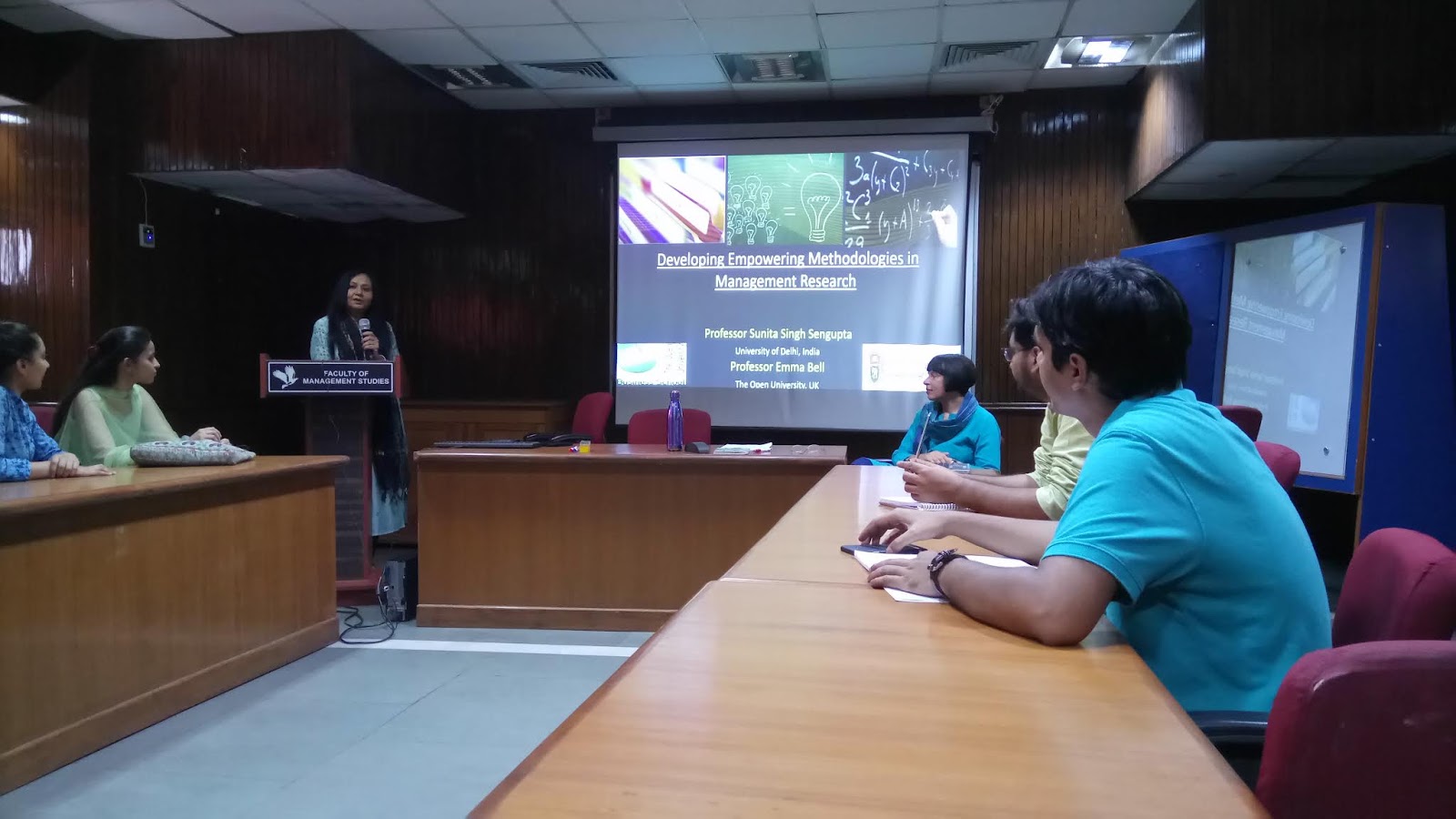
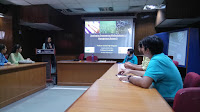 The workshop was a total success. Sunita made a brief introduction to the project and then Emma talked about the project in detail. A brief overview of Empowering Methodologies, which is still a working concept and what we expected from the workshop. We were looking for six PhD students to join the project to work on case studies which will exemplify the use of potential Empowering Methodologies. During the second part of the workshop we setup brainstorming groups with the students to discuss possible case study ideas based on their research background.
 We finished the event satisfied with the amount of ideas and interest from the students. We had an attendance of maybe 30 students which was great. We asked them to submit written applications and at the moment we are in the process of selecting 6 of them. I will write an update about this before the end of June.
The day after the workshop we were kindly invited for dinner at Sunita's place. And again it was a great experience to talk to her and her family about India and spirituality.
Now back in the UK I am processing all that I learned and experienced in that wonderful country. Because of course we also had the opportunity to do some sightseeing.

The day after the workshop we were kindly invited for dinner at Sunita's place. And again it was a great experience to talk to her and her family about India and spirituality.
Now back in the UK I am processing all that I learned and experienced in that wonderful country. Because of course we also had the opportunity to do some sightseeing.
Friday, May 18, 2018
More about the Empowering Project
The initial idea is to use post-colonial theory to look at power imbalances related to globalisation, colonialism and imperialism which are still affecting the planning and execution of management research in India. The Project will involve the use of politically-aware, humanist methods that ensure researchers' ethic of care towards participants and enable them to speak openly, including in ways which potentially challenge dominant managerial perspectives.
The Project will aim to recruit 6 Indian PhD students to work on Case Studies where they can implement the use of Empowering Methodologies. We are hoping that, in their methodological implementation, each Case Study will account for and demonstrate the cultural and traditional background of researcher and participants. One area in which I am personally interested to see is Religion and Spirituality. I am hoping to see how these two "concepts" can play a part the de-colonisation of methodologies.
Anyway, Professor Sengupta and Professor Bell got a £50000 grant secured (for 2 years) and we started working in early May 2018. First we will plan a visit to the University of Delhi, India to meet with Professor Sengupta and promote the project among students. The visit will take place last week of May 2018.
I will keep you up-to-date with our activities and outcome of the visit to India here.
Subscribe to:
Posts (Atom)